
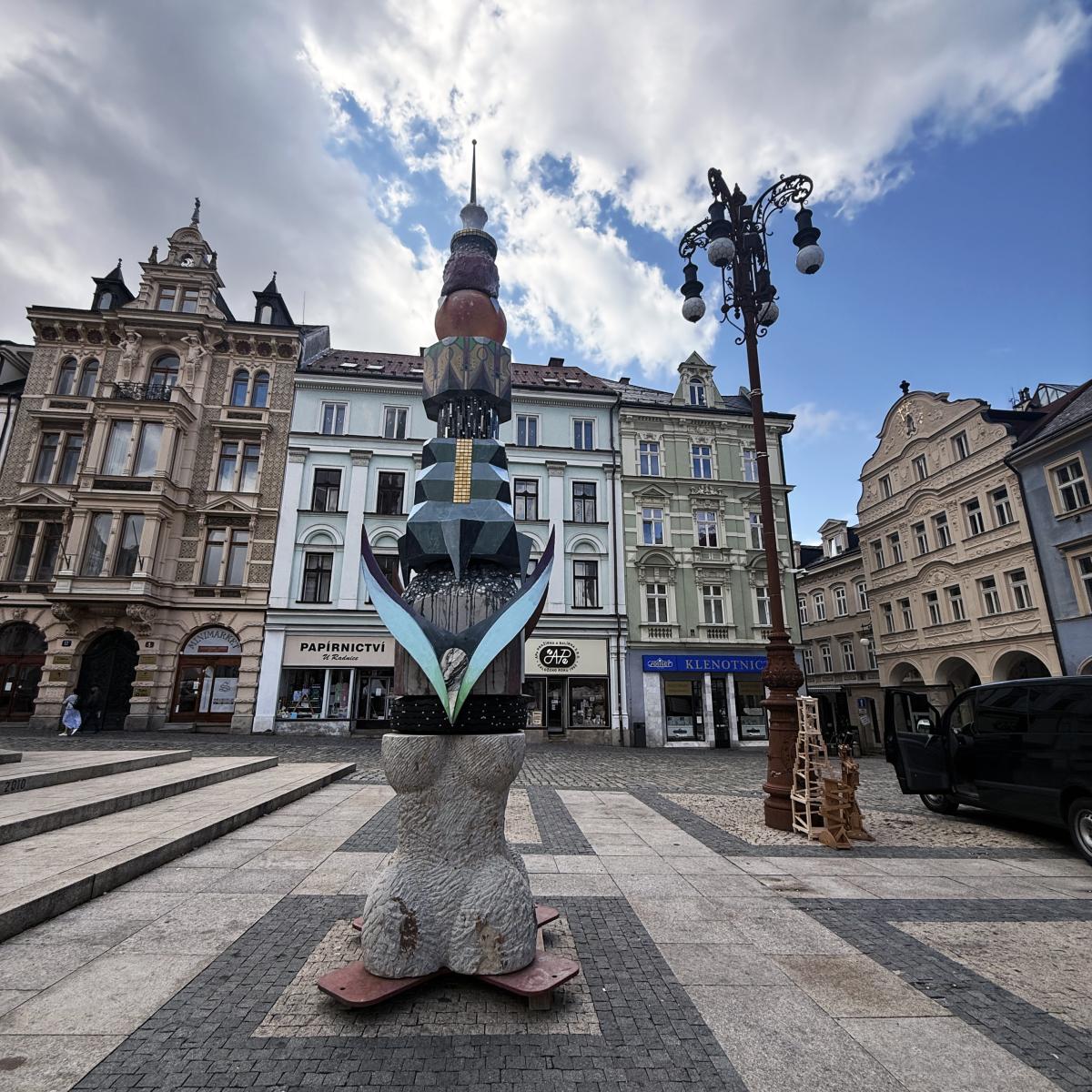
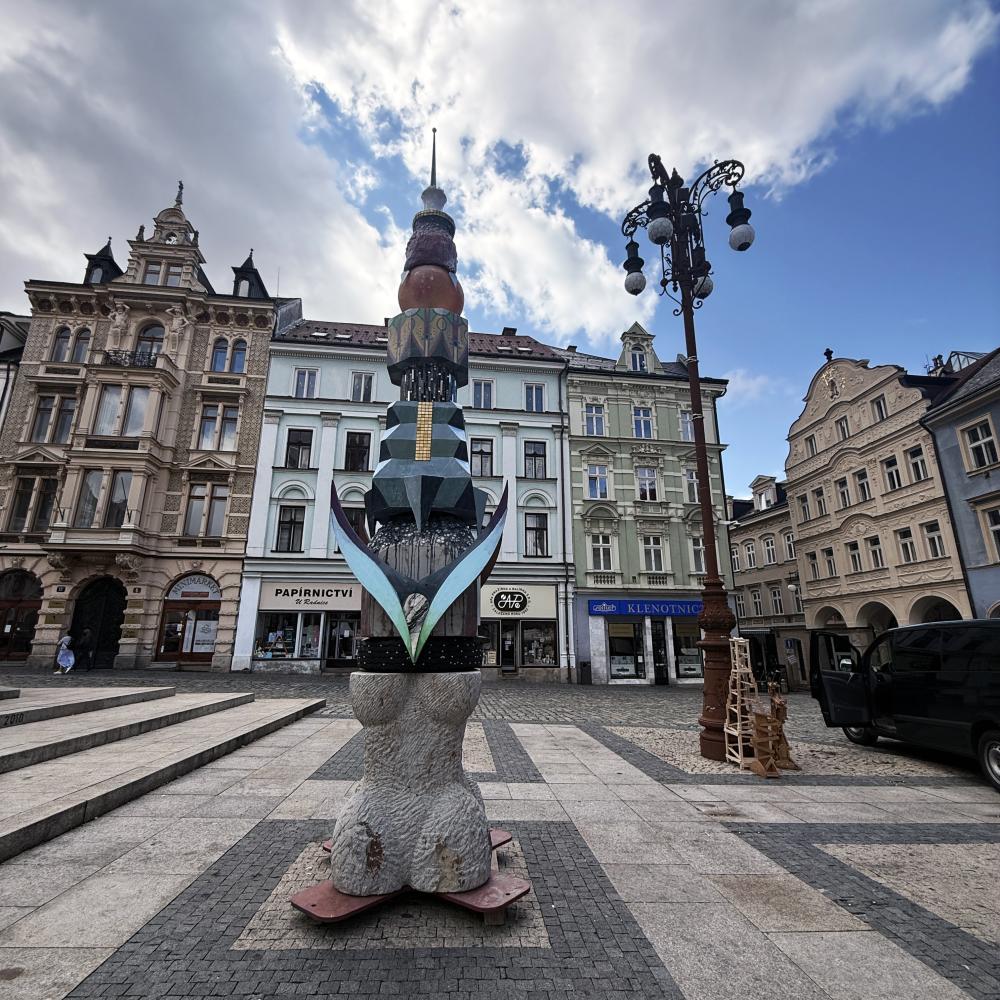
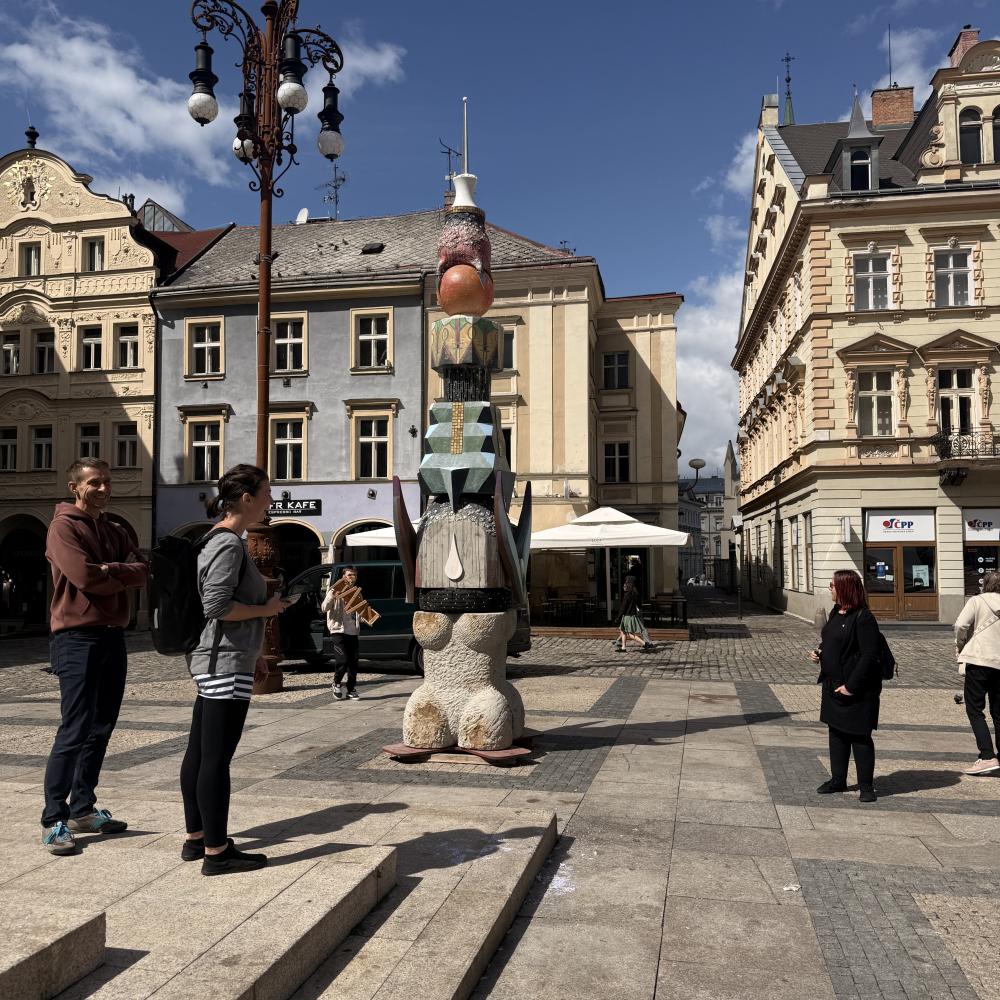
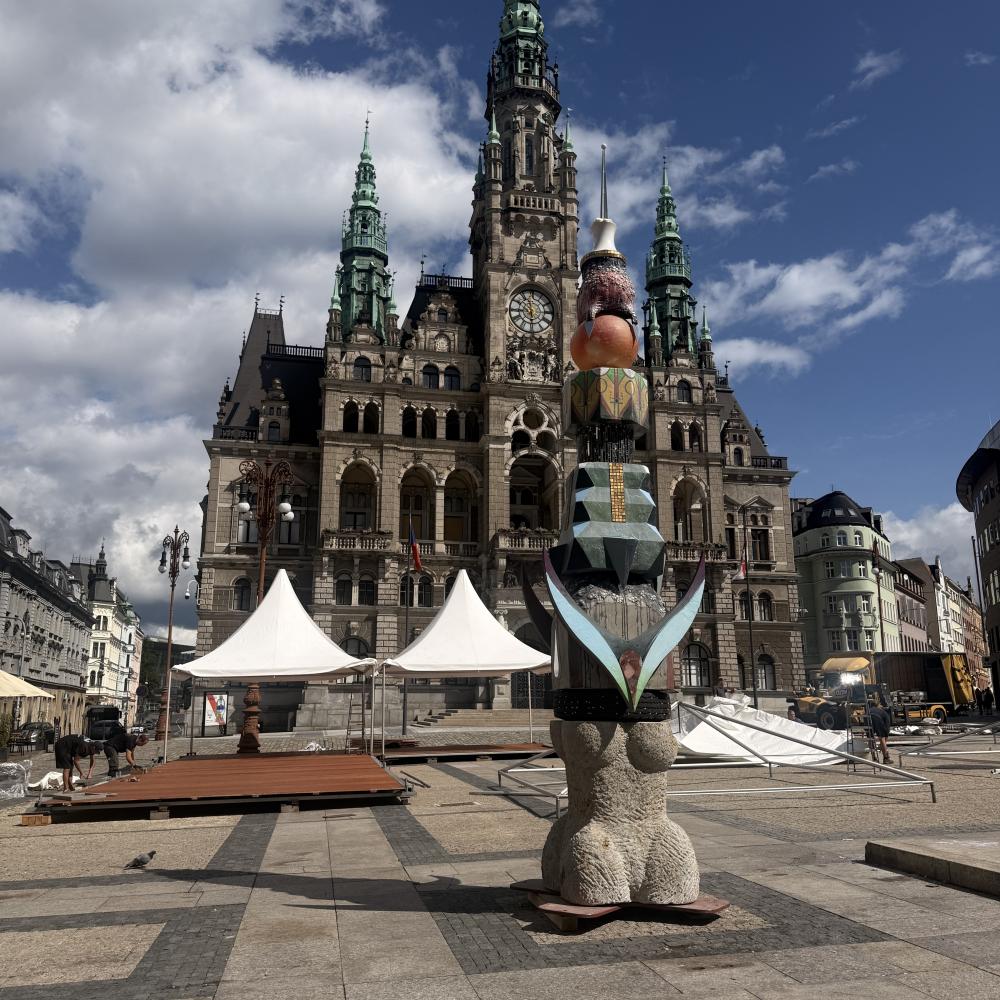
TOTEM on the square
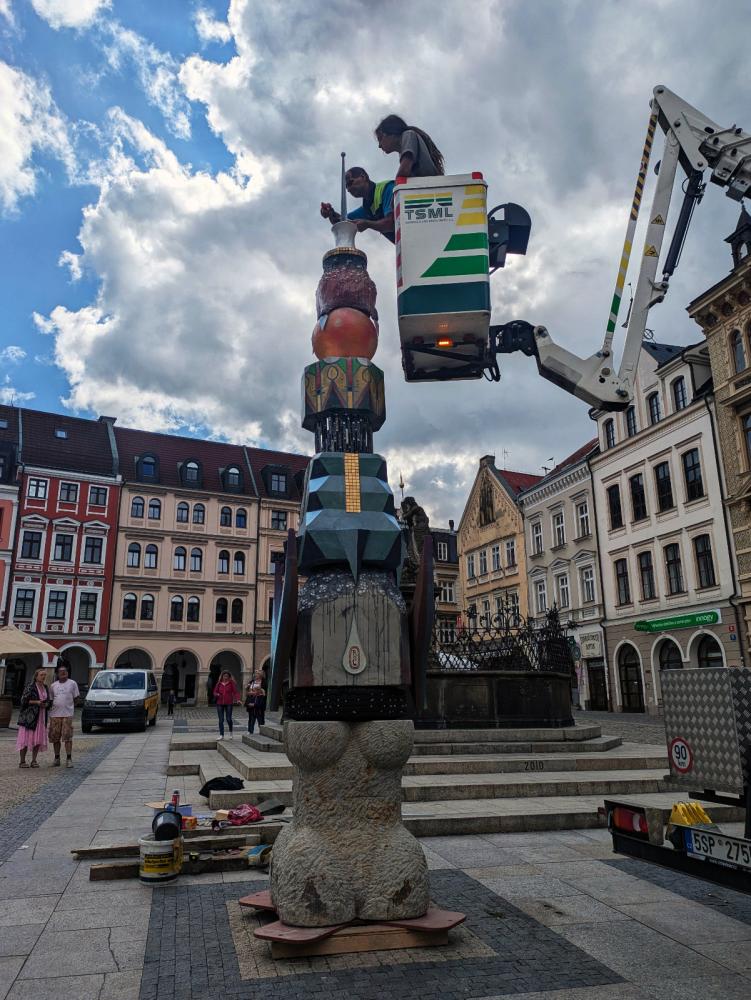
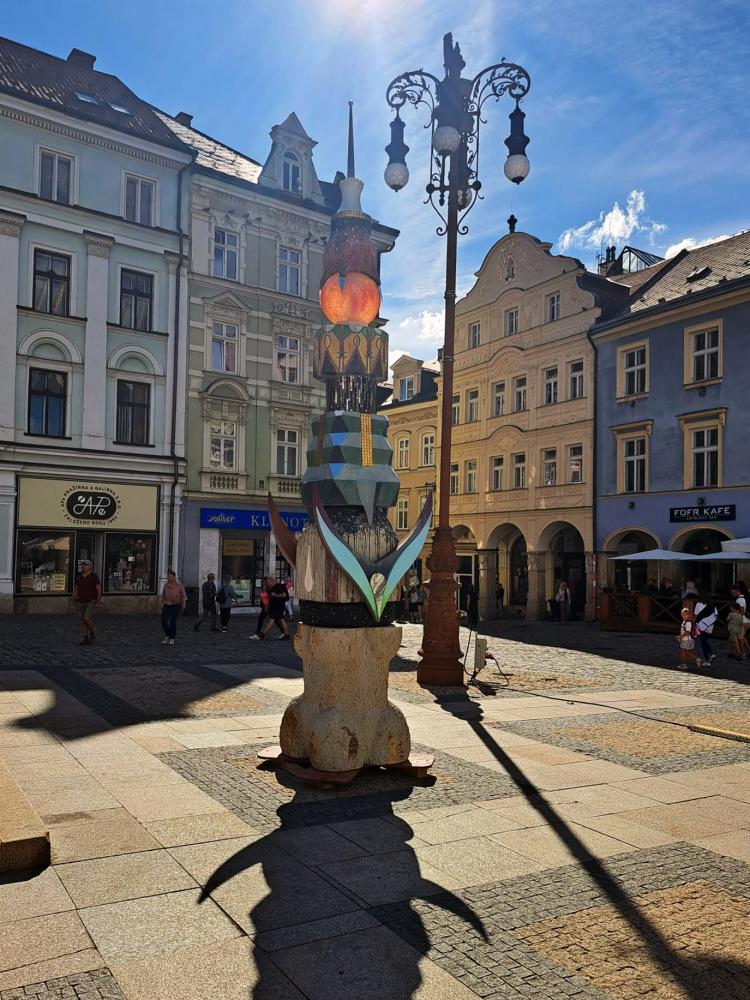
The totem-like structure, which can be viewed as part of Crystal Valley Week 2026 in E. Beneš Square, combines the archetypal symbolism of layering, orientation and the relationship between people and place with the jewellery-making tradition of Jablonec. The totem’s vertical composition alludes to the multi-layered history that led to the emergence of Jablonec jewellery as a global phenomenon. It is dedicated not only to glass beads or the industrial heritage of the Jizera Mountains, but above all, it was created out of respect for the local community of craftsmen, our ancestors. In this way, the totem takes on the significance of a cultural symbol and guardian of their history. At the same time, however, it serves as a reminder of the global trade network in which local craftsmanship has evolved into an international language of forms, colours and materials.
The totem sculpture was created as part of the grant project ‘In Search of the Spirit of Jewellery’, which was carried out in the newly established R. S. L. (Reakční studio Lavinia) art studio. This is an interdisciplinary collaboration combining the art studio in Jablonec (R. A. Chocholoušová) with the sculpture studio in Hořice (Bronislav Fiutowski). Instagram: R.S.L., website: www.chocholousova.com
R. A. Chocholoušová (*1979)
In her work, Radka Anna explores photography, video art, painting, the object and their interrelationships. She is currently completing her PhD at the Faculty of Art and Architecture at the Technical University of Liberec (TUL). She is a graduate of the Faculty of Fine Arts in Brno, where she studied in the Environment studio (Doc. ak. mal. Vladimír Merta); she completed her bachelor’s degree at the Faculty of Applied Arts and Design in Ústí nad Labem in the Natural Materials studio (Prof. Jaroslav Prášil, academic painter). She runs individual courses designed to develop artistic skills. She has long been engaged with rites of passage associated with non-invasive tattooing – the ritual adornment of the body. She works with ornament as metaphysical jewellery. In her doctoral thesis, she explores the space between the evocation and the realisation of an object.
Bronislav Fiutowski (*1971)
Bronislav Fiutowski is a sculptor with many years’ experience in creating sculptural objects and in their restoration. He currently serves as a master sculptor at the secondary school of sculpture in Hořice, where he passes on his professional expertise to the younger generation of artists and craftspeople. His work is based on a thorough understanding of materials, technology and traditional sculptural techniques. He focuses primarily on works in public spaces and on transforming familiar forms into autonomous artistic statements. His works often explore the relationship between the human scale, the function of an object and its symbolic meaning. He is characterised by a sensitive approach to proportion, monumentality and the expressive qualities of materials. In his studio, he also utilises waterjet technology, which expands the possibilities for the precise shaping and machining of various materials.
Sponsors: INZA Rohoznice s.r.o., Kamenosochařství Tomáš Hála, Dubenecký pískovec s.r.o., BESTA-Berný s.r.o. Hořice, Technical University of Liberec (FUA TUL), the Šenfeld family


