
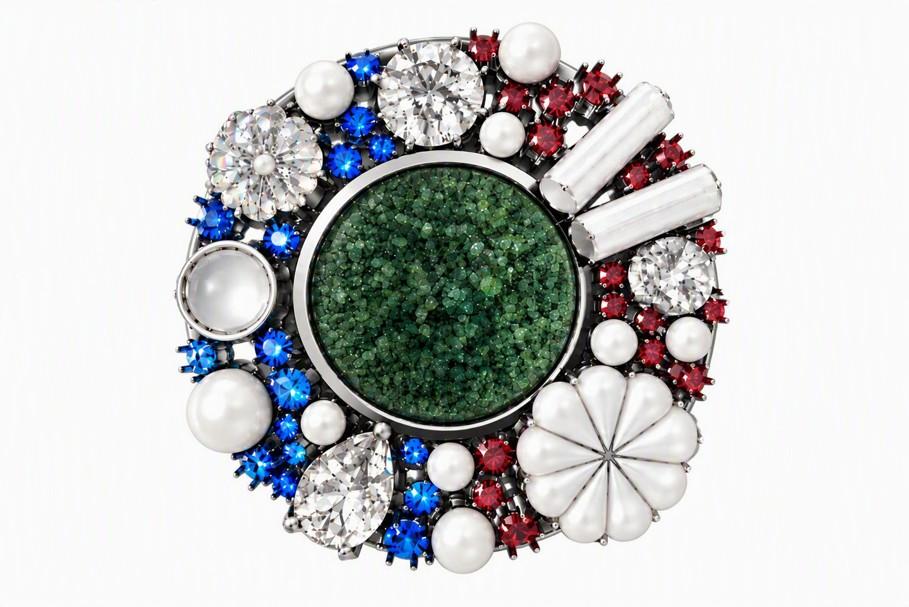
A piece of jewellery from the Crystal Valley is set to reach great heights. As early as next year, it could light up the International Space Station
The renown of Czech glassmaking and jewellery craftsmanship extends far beyond the Earth’s borders. We are deeply honoured that the Crystal Valley brooch was selected by an expert panel as one of the items that astronaut Aleš Svoboda could take with him to the International Space Station (ISS) as part of the ‘Czech Journey to Space’ project.
The brooch will link more than 700 years of Czech glassmaking tradition with contemporary design and the journey into space. It combines Czech glass, Czech garnet, moldavite and other components, bringing together Czech nature, craftsmanship and human creativity.
This piece of jewellery, which embodies the story of traditional Czech glassmaking and jewellery craftsmanship, skill and creativity, conceals a number of symbols. It references Czech identity through its colour scheme, based on the Czech national colours – white, red and blue – as well as through its individual components.
A work representing the entire region
The brooch also reflects the uniqueness of the region from which it originates. The Crystal Valley in the Liberec Region stands out on a global scale for its concentration of glassmaking, costume jewellery and fine jewellery workshops within a relatively small area. It is precisely the richness of their work and the diversity of their craft techniques that are reflected in the final form of the artefact.
Along with this unique piece of jewellery, a message of collaboration is also heading into space. This is not the work of a single manufacturer or brand; several members of the Crystal Valley have contributed to the creation of the brooch. Each of them has contributed a part of their skill, effort and personal story to the piece. The individual components are assembled into a functional and representative artefact by master craftsmen from the traditional jewellery firm Granát and the Turnov Artistic Production Cooperative, which works with Czech garnets.
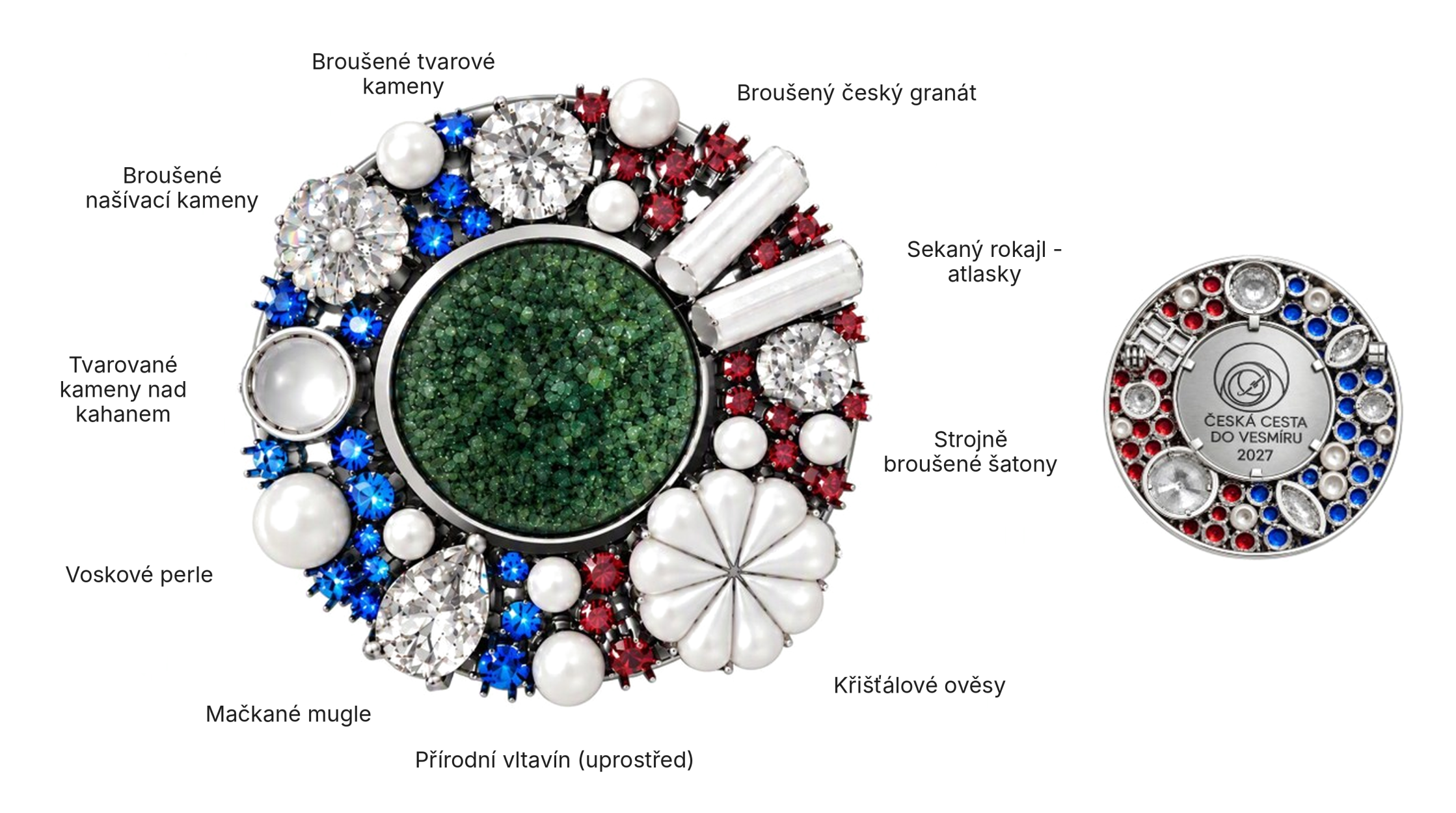
What is hidden inside this brooch?
The silver brooch, which may well find its way to the International Space Station, has a diameter of 7 centimetres and weighs around 100 grams. Within a relatively small space, it brings together materials, craft techniques and manufacturing processes that have shaped the glass and jewellery traditions of the Crystal Valley for centuries. Each of the components used represents a specific craft, a manufacturing process or a material:
Czech garnet: The history of this mineral, with its characteristic rich red to blood-red colour, began hundreds of millions of years ago deep beneath the Earth’s surface. It is a beautiful contrast that these treasures will soar high above the earth on a brooch that symbolises Czech culture and tradition.
Vltavín: It has been connected to the cosmos from the very beginning. This rare material, which we admire for its characteristic green colour, was formed around 15 million years ago by the remelting of rock following a meteorite impact.
Šatony: Cut glass stones from the Crystal Valley shine on red carpets, stages and catwalks both here and around the world, thanks to their quality, their ability to reflect light perfectly and create a striking brilliance. Behind their success lie precise cutting techniques as well as innovations in colours and the number of facets – that is, the bevelled surfaces.
Shaped cut stones: They are a key component of fashion designs and appliqués, enabling the creation of original motifs and effects on fabrics, in jewellery and in costume jewellery. The diverse shapes of the cut stones play with light, its refraction and reflection, creating new lighting effects.
Glass ornaments: These are inextricably linked to the global success of the crystal valley’s lighting fixtures. Each ornament has its own role. Depending on the designer’s intention, its shape, size and structure allow the light to shine through, scatter, reflect or create a rainbow. In this way, they transform the chandeliers into a jewel within the interior.
Components hand-shaped over the flame: These represent one of the original techniques included on the UNESCO List of Intangible Cultural Heritage. The combination of fire, glass, human skill and current fashion and design trends always gives these components an unmistakable shape.
Pressed stones and ‘Mugle’: these combine the traditional Czech technique of hand-pressing – which has also been included on the UNESCO list – with the ability to create a layered structure, depth of colour and striking visual effects within a single stone. Thanks in part to the variety of pressed stones, the Czech Republic has become a key player on the global fashion jewellery map.
Beads and rokajl: These are among the fundamental traditional components of this region. Their production allows for a multitude of combinations of colours, shapes, sizes and surface finishes, and the variety of the range is unique worldwide. The beads are created by precisely cutting glass tubes into small pieces with a characteristic shape.
Wax beads: glass beads with a velvety, pearlescent surface that gives them the appearance of natural pearls.
From the Crystal Valley to orbit and back
A single piece of jewellery thus combines Czech natural materials, centuries of craftsmanship and contemporary design. The ‘Crystal Valley’ brooch is an example of what the Czech glass industry, costume jewellery production and jewellery art are capable of.
Following its return from the ISS, the brooch is returning to the Liberec region – as a memento of the journey taken by Czech craftsmanship all the way into Earth’s orbit.


