
Traditional craftsmanship is making a comeback. The company Preciosa Ornela has resumed production of Czech glass mosaics.
In the second half of the 20th century, glass architectural mosaic was one of the defining features of Czech architecture. Its colourful panels adorned swimming pools, schools, cultural centres and public spaces, and to this day they form an integral part of many significant buildings. However, as renovation work progressed, it became increasingly difficult to find a material that would match the original appearance and production techniques.
It was precisely this need that prompted Preciosa Ornela to resume the production of Czech glass mosaic.
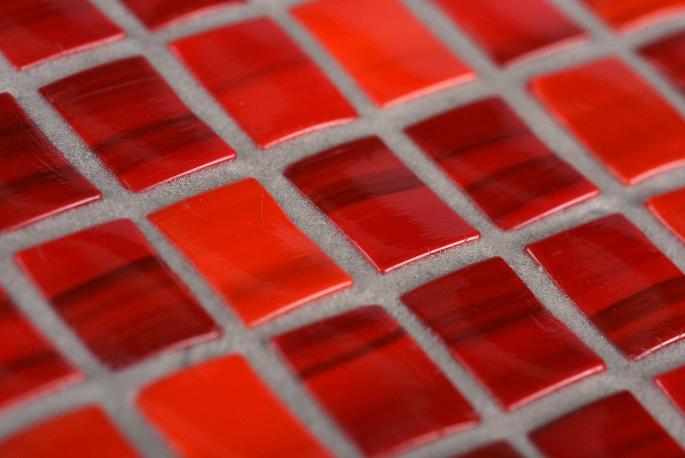
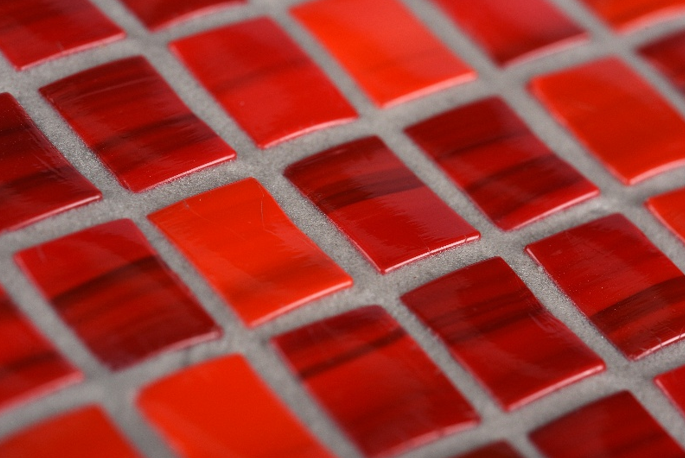
The impetus came from the renovation of the swimming pool in Liberec. Its managers were looking for a way to faithfully replace the original red mosaic with its characteristic black mottling. They approached Preciosa Ornela, one of the leading manufacturers of coloured glass in the Czech Republic, with a request to produce an exact replica.
However, resuming production was no simple task. The original technology had not been used for many years, and it was therefore necessary to rediscover the production processes that were commonplace several decades ago. Thanks to the company’s own technological resources, archive materials and, in particular, the recollections of those who had witnessed the original production, it was possible to reconstruct this unique process and bring glass mosaic production back into operation.
Historical material for contemporary restoration projects
The resumption of production offers restorers and conservationists the opportunity to authentically repair historic mosaic surfaces. Instead of using substitute materials, they can now utilise mosaics that match the original appearance and properties, which is particularly crucial when restoring architecturally significant buildings from the second half of the last century.
New colours open up new possibilities for architects and designers
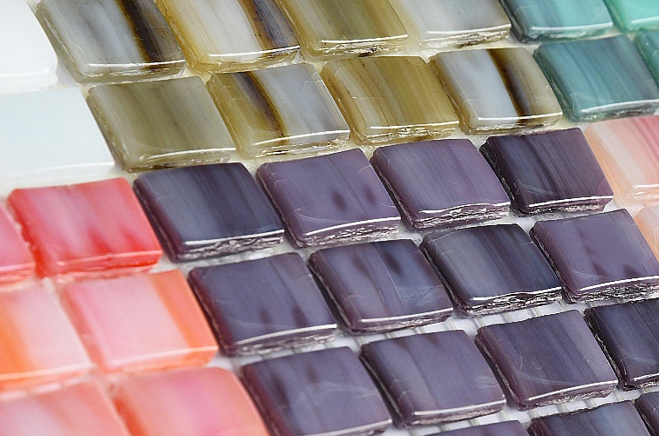
However, the revival of this historic product was not the ultimate aim of the project. The traditional technology was further developed, resulting in a range of new colour combinations designed for contemporary architecture and interior design.
Glass mosaic is thus now used not only in the restoration of historic buildings, but also in modern, signature projects, public spaces, commercial interiors and art installations. The new colour palette and versatility of the material give architects and designers scope for original work with surface, texture and light.
Uranium glass: a dazzling innovation
Among the most interesting new developments is mosaic made from uranium glass. This specific material has the unique property of fluorescing under ultraviolet light, creating a striking lighting effect and transforming the character of a space.
It thus offers architects and designers new possibilities for shaping the atmosphere of both interiors and exteriors. Whilst the mosaic appears elegant and understated under normal lighting, it becomes a striking visual feature under UV light.
A return to tradition with an eye to the future
The resumption of production of architectural glass mosaic demonstrates that traditional Czech glassmaking techniques still have a place in the present day. What began as an effort to preserve the authentic appearance of the Liberec swimming pool has gradually evolved into a project with potential for heritage conservation, modern architecture and contemporary design.
Preciosa Ornela thus builds on the rich heritage of Czech glassmaking whilst demonstrating that even a material associated with the last century can find new and inspiring applications in 21st-century architecture.


