
From glass figurines to a commission for Chanel. The Jaroš family glassworks has found a home near Sychrov
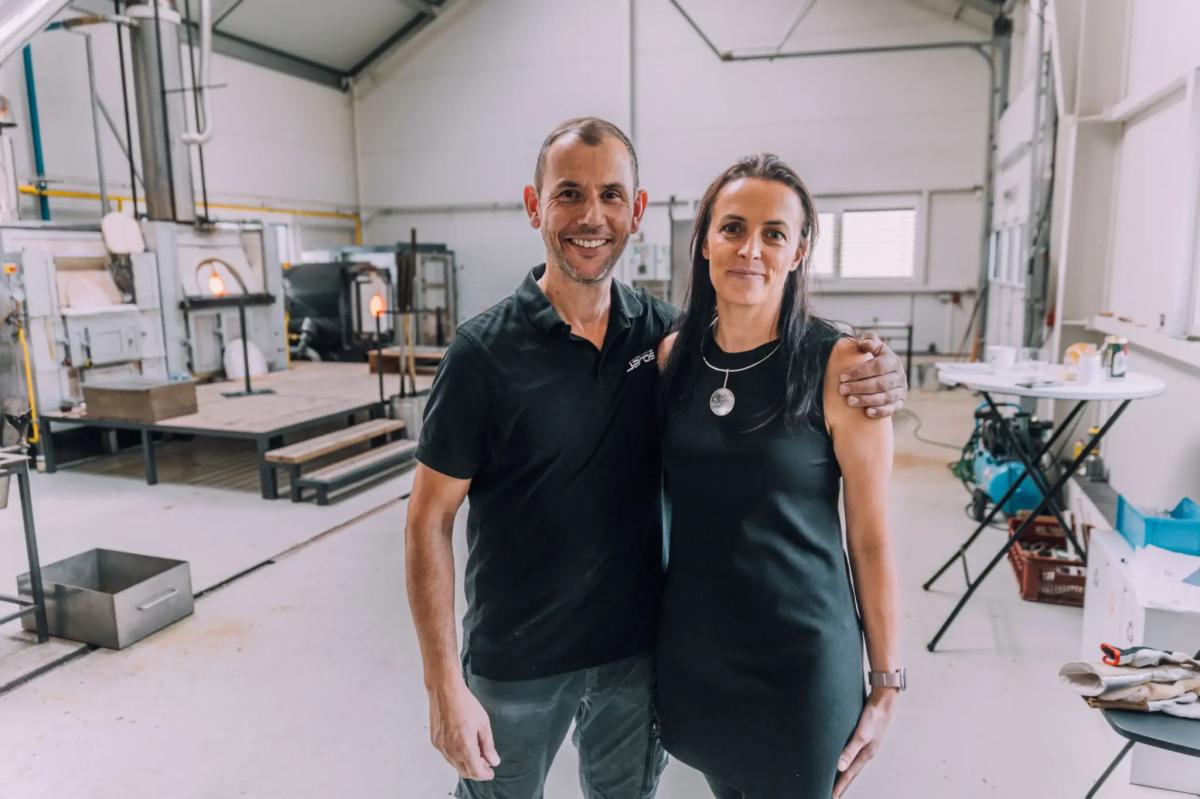
Marie and Václav Jaroš have been making glass for over 25 years. For almost two decades they produced their work in rented premises; today they have their own glassworks not far from Sychrov Castle. They supply components to designers of lighting and have also worked for the fashion brand Chanel. In addition, they enjoy showcasing their craft to the public. The glassworks features a cosy café from which visitors can easily catch a glimpse of the production process.
Marie and Václav Jaroš met at the glassmaking school in Železný Brod. Marie studied a technical subject, whilst Václav is an artist and a qualified blacksmith. It is precisely this combination of the two crafts that gives him an advantage when carrying out challenging commissions.
They set up their first shared workshop in Maršovice, near Jablonec nad Nisou. However, it soon became too small. After selling it, they moved their production to the premises of the glassmaking school in Železný Brod for almost twenty years. They had to relocate the polishing workshop, dispatch department and showroom to a different address, however.
Everything under one roof
“We were constantly travelling between three different locations. It was time-consuming and inefficient,” recalls Marie Jarošová. So she and her husband began looking for a plot of land on which they could build their own glassworks and centralise the entire operation in one place.
They found it in Husa near Paceřice, not far from Sychrov Castle. Not only did it meet the requirements for commercial development, but its location was ideal for attracting both locals and tourists. After all, opening the glassworks to the public had been part of the plan from the very beginning.
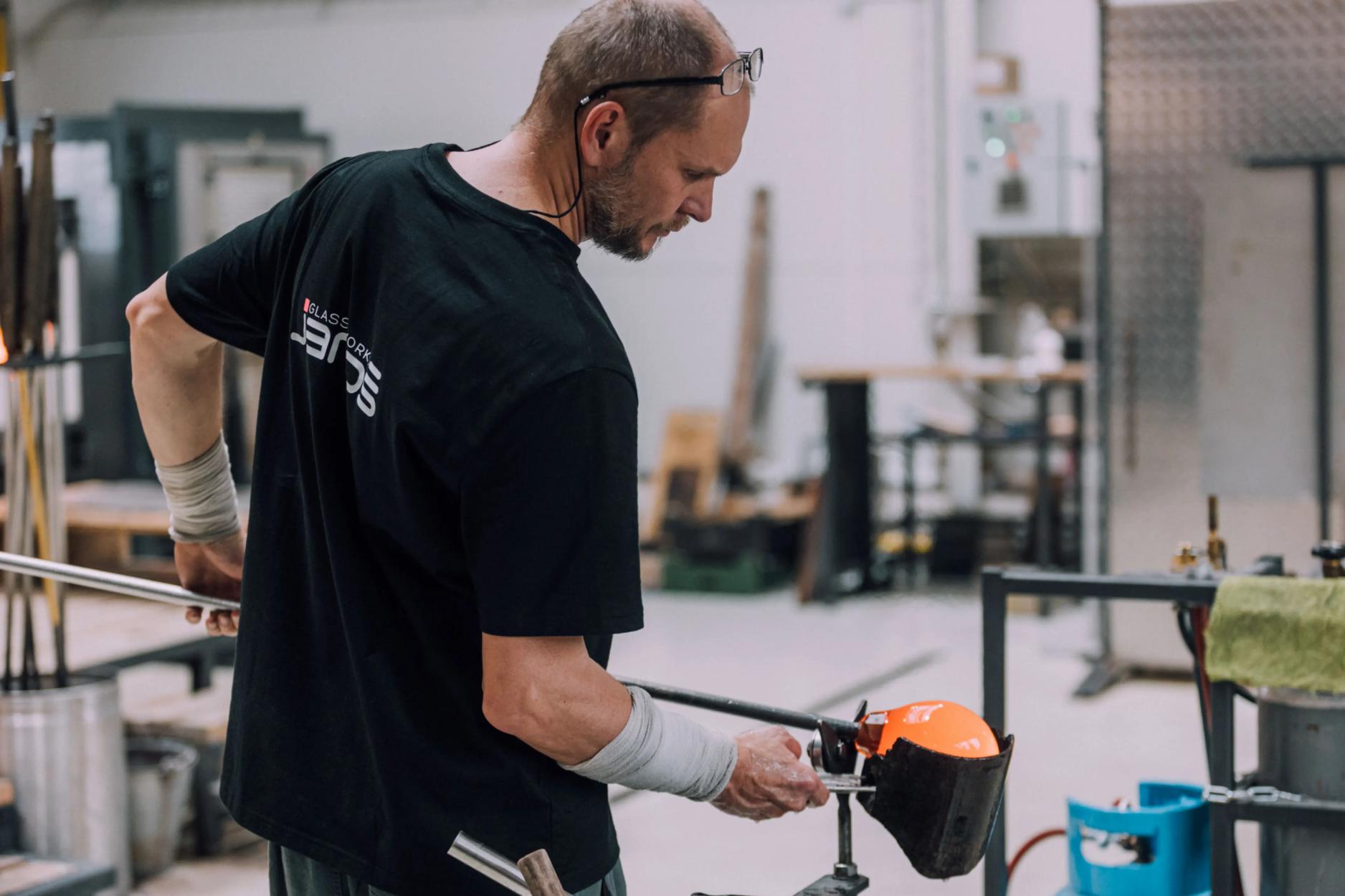
In 2024, the Jaroš family opened a glassworks where visitors can watch the hustle and bustle around the furnaces with their own eyes. “It’s a beautiful craft, and it would be a shame if we kept it to ourselves,” says Marie Jarošová.
Glass for Lasvit and Chanel
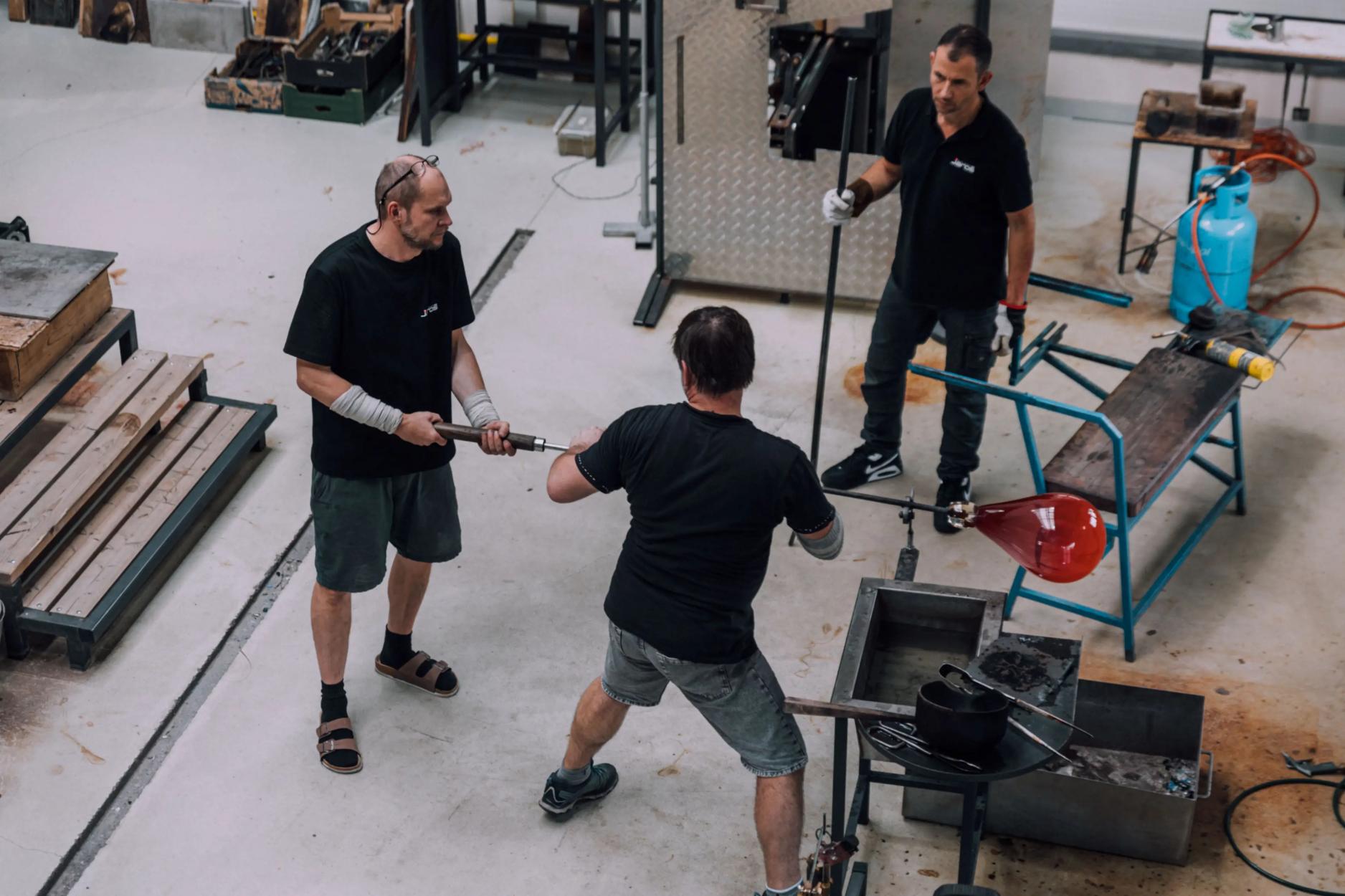
With the new glassworks, the composition of their production programme has also changed. The Jaroš family has moved on from glass figurines to bespoke production. They produce glass components for designers of lighting according to specific requirements. Their clients include Lasvit, Elite Bohemia, Artglass and Gladee Lighting.
And that’s not all. They have also completed a commission for the fashion brand Chanel. They produced glass stones for the brand, symbolising the night sky. In total, over six hundred were created in three sizes.
The original range has not disappeared, however. Hand-blown animal figurines and other decorative products now complement the bespoke production. This helps the glassmakers utilise the spare capacity of the furnace, which operates round the clock.
The other half of the glassworks was originally intended to serve as a showroom. “What began as a small coffee machine eventually grew into a proper café,” explains Marie Jarošová.
The combination of the glassworks and the café has proved a success. People come here to enjoy a bit of peace and quiet, watch the production process and, whilst they’re at it, choose some glass decorations. Some return regularly in search of unique gifts.
Crystal Valley makes sense
The Jaroš family are part of Crystal Valley, a project run by the Regional Development Agency and the Liberec Region, which supports the region’s glassmaking, costume jewellery and fine jewellery crafts.
“Crystal Valley raises our profile and that of other companies. During events, families with children and other people full of positive energy come along; they can handle the glass or even make something as a souvenir,” says Václav Jaroš.
Both husband and wife believe that the future of the local glass industry rests on high-quality schools and skilled craftspeople. Above all, they hope that Czech glass will receive plenty of challenging commissions from architects and designers – the sort that require experience, skill and a personalised approach, and which cannot simply be outsourced to manufacturers in Asia.


