Precious stones from the Bohemian Paradise

The brothers Jan and Václav Fišers from Turnov. Their alleged voyage to Venice, five years of efforts to seize the local secret of secrecy, return to Turnov, dozens of wasted attempts and then - finally success! In 1711 they made the first glass for the production of artificial stones.

THE GLASSHOUSE IN NOVÝ SVĚT

It was in 1712, when Elias Müller built his glassworks on the estate of the Harrach Counts in Jilemnice. It continued in the traditional production of glass, which was produced on the border of the Giant Mountains and the Jizera Mountains in the middle of the 14th century. Even today, you can see not only metallurgical production and blowing glass, but also a hundred-year-old grinding shop. It is driven by a water turbine and transmissions used to distribute the driving force.

ELIAS PALME

Elias Palme, one of the most famous luminaire manufacturers, continued the tradition of chandeliers in Kamenický Šenov. Industrial production of chandeliers was started in 1724 by Josef Palme in Prácheň.

ELDORADO OF BEADS AND SEED BEADS

Surely you would not find in the whole Principle and in the broad surroundings of a person who would say a crooked word about Jan Šourek. After all, it was as if he had come to the Principle of Prosperity and Welfare. As soon as he took possession of the reeve, life in the village began to turn for the better. He was one of the first to venture into the world for business.

JOSEF RIEDEL

Josef Riedel, king of the Jizera Mountains glassmakers, was born in Hejnice in 1816. He was the representative of the sixth generation of the glass family and imprinted his footprint indelibly on the slopes of the Jizera Mountains.

FRIEDRICH EGERMANN

JOSEF PFEIFFER

Josef Pfeiffer - Jablonec entrepreneur and mayor, who was involved in the development of jewelery exports. Everything is confirmed at the imperial court and in 1866 Jablonec became a town during his reign.

BLOWN BEAD and its way to the tree

People can make sense of time and numbers, but not us, beads. However, I have heard that they have been blowing me in the mountains for more than a hundred years. As a bead would put it, that is a long time. You, who have never seen how a bead is born, you don´t know how beautiful life can be....

MELTED GLASS SCULPTURE

In 1920 the first Czech glass school was founded in Železný Brod, thanks to which the town became a center of glass art.

Mapa

Opening Expectations/Erwartung

Galerie N - Jehlářská 520/14, Jablonec nad Nisou, 466 01 | MAPA

Detail


Program

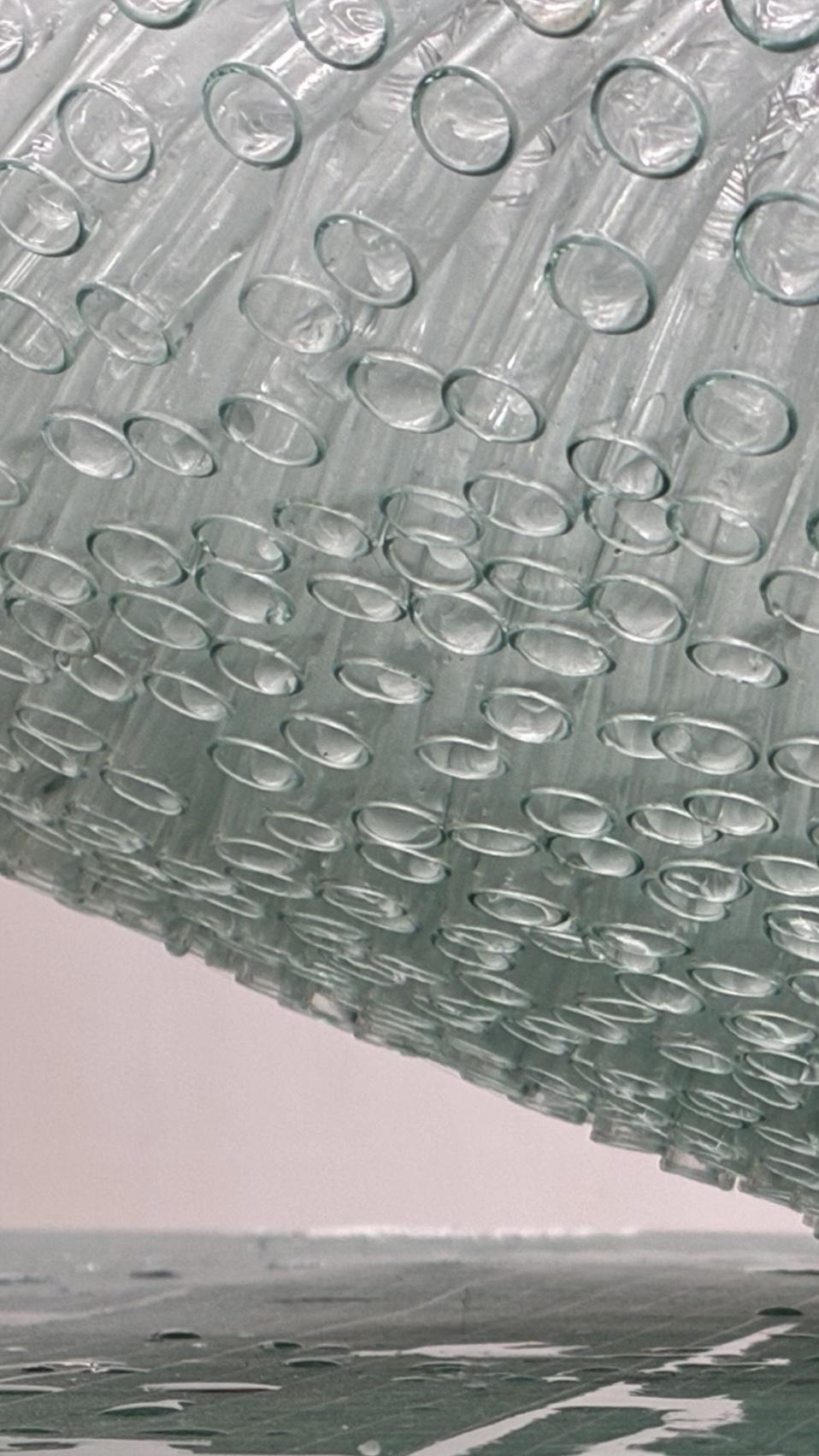
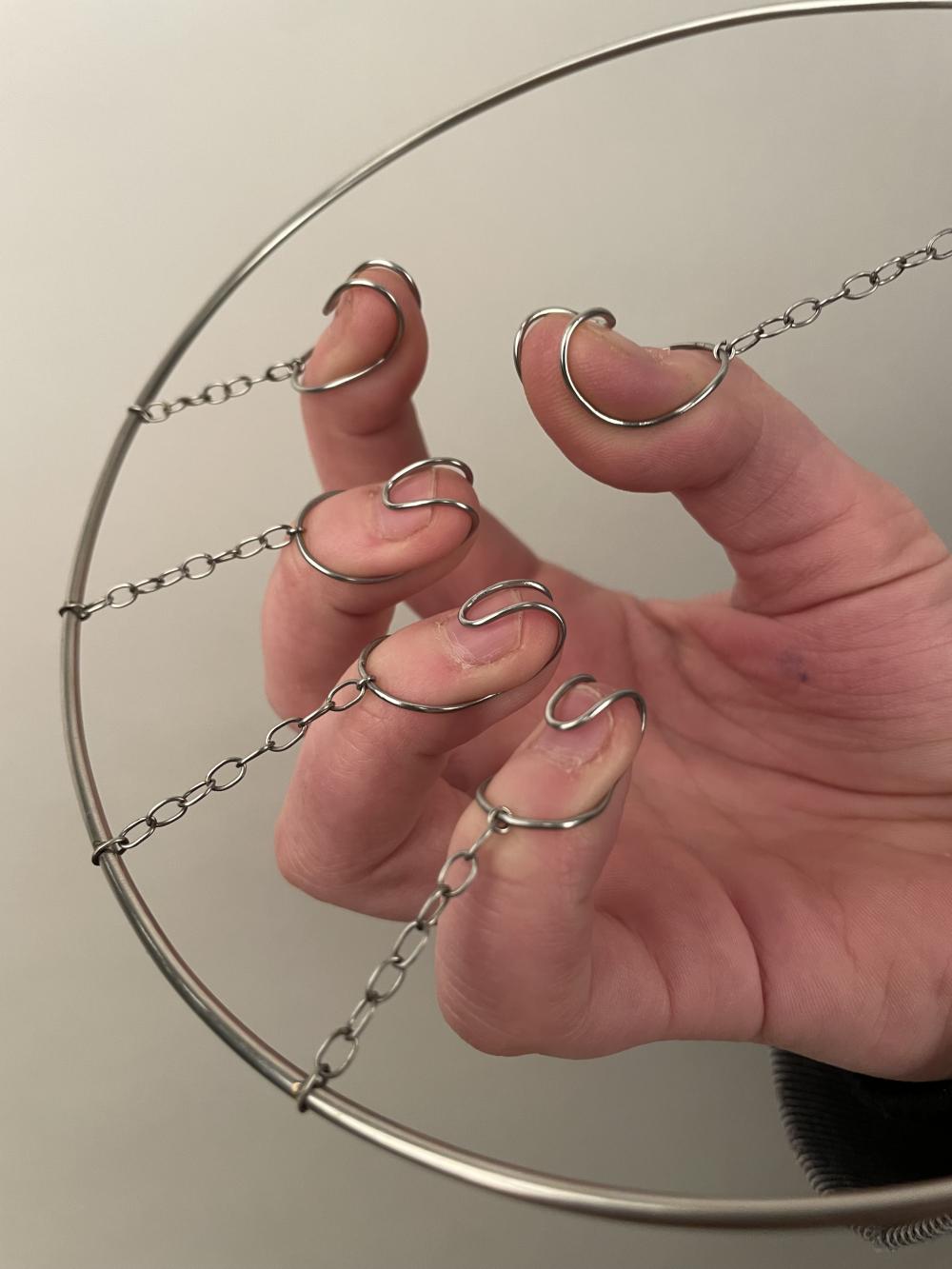
Who is Godot and what does waiting mean? Is it an action or an absence of action? A physical pause or emotional limbo? Is waiting an initial existential state, a silent prelude to the inevitable end? This exhibition presents artistic reflections on the nature of waiting and how this endurance can be made visible and tangible.

The exhibition WAITING / ERWARTUNG presents a selection of works by students of Burg Giebichenstein University of Art and Design Halle:

Coco Martina Brüschweiler, Jasper Helwig, Gesine Otto, Vahdeta Tahirović, Joshua Raasch, Solomija Ratušna, Luise von Cossart, and students from the Faculty of Textile Engineering at the Technical University of Liberec, Department of Design: Josefína Váchová, Anna Hornová, Nella Meresová, Radek Votoček, Ondřej Kábele, Daniela Dolejší, Barbora Šolcová.

The title of the project consists of the German and Czech words Očekávání / Erwartung, reflecting the collaboration between artists from Germany and the Czech Republic. Both words mean "expectation," but they also embody the dual nature of waiting—the anticipation of something external and the confrontation with the internal demands of one's own and others' expectations (warten/čekat).

Through diverse artistic perspectives, Očekávání / Erwartung explores how waiting and expectation create meaning in relation to hope, doubt, and uncertainty, and how they reveal the very nature of time.

The exhibition will run until March 20, 2026.

Kontakty pro média